Objects of Desire
Two telescopes and a finger: the gadgets that changed the sky
Galileo’s two surviving telescopes, the lens that found Jupiter’s moons, and a famous finger.
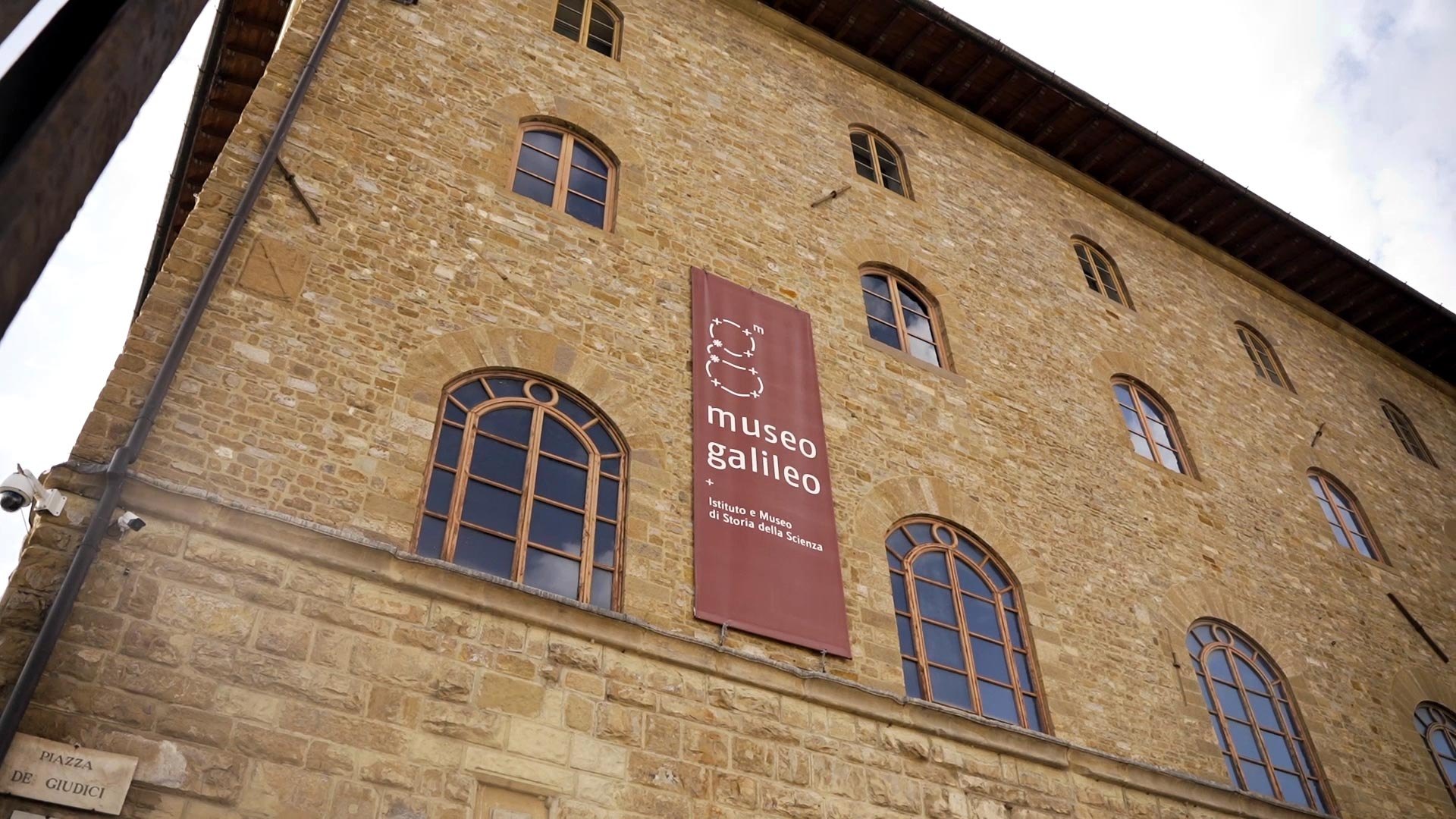
Photo Credit
Image courtesy of © Museo GalileoBefore there were phones with three cameras, there was a Pisan with a tube of lenses. The Museo Galileo in Florence keeps the only two surviving telescopes made by Galileo, the lens that first showed him Jupiter’s moons and, rather startlingly, a finger. Here is the original tech story, checked against the museum’s own pages in November 2026; our Tech list has the modern gadgets.
The two survivors
Every gadget in your bag owes something to a man who built his own. The room dedicated to Galileo is the heart of the Museo Galileo, on Piazza dei Giudici, and it holds the only two surviving telescopes of the many he made. They are modest objects to look at, and they rearranged the universe.
The museum is careful about the history. The first spyglasses were made in Holland in the early 17th century, it notes, but Galileo alone immediately grasped their astronomical potential. He was less an inventor than the first great user, which in the modern tech business would make him the most valuable person in the room.
The lens of January 1610
Beside the telescopes lies the objective lens through which, in January 1610, he observed the satellites of Jupiter for the first time. It is a reminder that the most important upgrade in astronomy came from someone grinding glass by hand. Around it are the military and geometric compasses he developed in his years in Padua, and other instruments of his own invention.
The collections around this room are among the most important of their kind: the scientific instruments gathered first by the Medici and then by the Grand Dukes of Lorraine, some 1,000 of them. They show a court that collected precision the way others collected jewels.
Galileo has been celebrated in Florence for centuries, and the room shows it: a marble bust by Carlo Marcellini sits at its centre, with two oil paintings, Tito Lessi’s Galileo and Viviani of 1892 and Annibale Gatti’s Galileo and Milton, and a medal attributed to Giovanni Battista Foggini. This is a hero’s room, not a laboratory.
A finger in a glass case
And then there is the finger. On 12 March 1737 Galileo’s remains were moved from his first grave to the monumental tomb in the Basilica of Santa Croce, arranged by his last disciple, Vincenzo Viviani. On that occasion three fingers and a tooth were removed. The middle finger of his right hand is displayed on a stand, in a case made around 1737, which seems a fitting last word for his critics.
Florence keeps Galileo’s middle finger on display, which seems a fitting last word for his critics.
The finger has had a public life of its own. When the Tribuna di Galileo opened in 1841, a room built to honour him, it was shown in a niche beside his statue, alongside his proportional compass and an armed magnet. The museum calls Galileo the secular saint of science, and the relics are exactly that: a saint’s treatment for a man who, in life, had rather a difficult relationship with the authorities.
It is worth pairing the two visits. The tomb is at Santa Croce; the finger and the telescopes are at the museum, and a walk through the centre between them covers the whole of his afterlife. On Saturday 21 November 2026 the museum runs “A spasso con Galileo”, a tour of the museum with an unusual guide: Galileo Galilei himself, telling the story of his life.
What makes an object of desire, in the end? Not the finish, but what it lets you see. Every camera phone in a visitor’s pocket is a descendant of a tube that let one man see moons around Jupiter where nobody had seen any. The museum puts that lineage under glass without a single screen required to explain it.
Our advice: give the Museo Galileo two hours and start with the room of Galileo’s new world; then walk to Santa Croce to see where he lies. For the gadgets of this century, from earbuds to travel smartwatches, our Tech list has the comparisons.
Why it's on our list
- The two survivors
- The lens of January 1610
- A finger in a glass case
Location
The map comes from Google Maps, which sets its own cookies once it loads.
More in depth
 Objects of DesireA corridor over the river and a villa for princesses: Tuscany’s great housesThe reopened Vasari Corridor, Villa Reale di Marlia, Villa Bardini and a winery built into Chianti.
 Objects of DesireEqual parts, one count: the Negroni and the bars that pour itThe Negroni as the IBA writes it, Campari’s Florentine origin story and where to drink one.
 Objects of DesireLess parked than crouched: the electric Jaguar and the new supercarsJaguar’s Type 00 and Type 01, Ferrari’s first electric car and the record-breakers around them.