Objects of Desire
Ferrari’s green circuit: bees, kerbs and 5,245 metres of Mugello
The Mugello Circuit: an unchanged layout, Ferrari’s test track, 120,000 bees and your own track day.
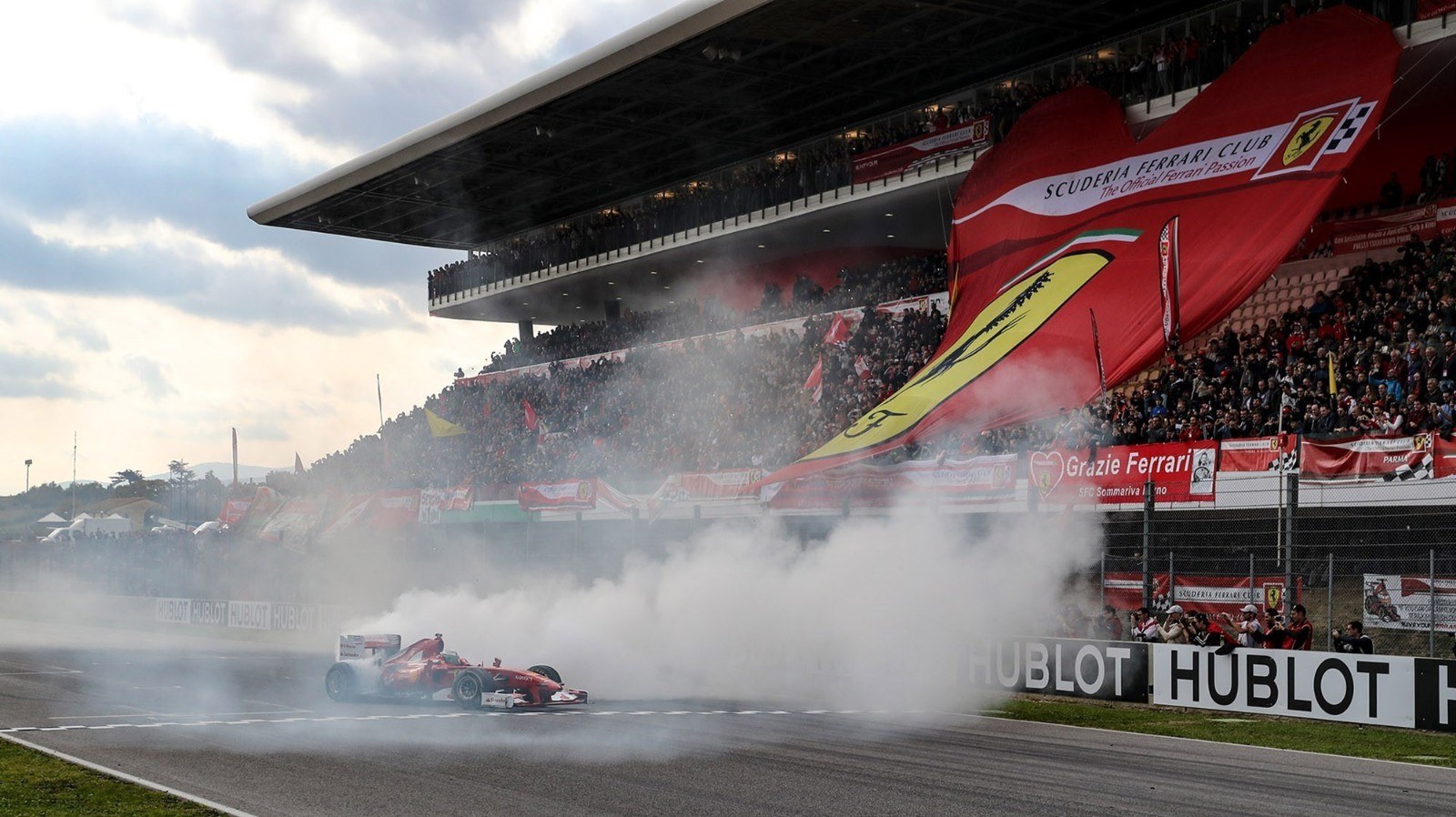
Photo Credit
Image courtesy of © Mugello CircuitWhat does a racing circuit do to earn its place in the most beautiful hills in Italy? At the Mugello, north of Florence, the answer has been to stay exactly as drawn in 1974, to host Ferrari and the Italian motorcycle Grand Prix, and to give a corner over to bees. Here is the circuit as a beautiful machine in its own right, checked against its own pages in November 2026.
A track that never moved
Most great circuits have been redrawn so often that their old drivers would not recognise them. The Mugello has not. Since it opened on 23 June 1974 with a Formula 5000 race, its 5,245 metres through the wooded hills of the Mugello have kept the same line, a fact the circuit itself calls more unique than rare. The buildings around it have been thoroughly renewed; the tarmac has stayed put.
That line is the attraction. From the start the cars dive into San Donato, the slowest corner, climb through Luco to Poggio Secco, the highest point of the track, and plunge down to the two Arrabbiata bends, the lowest. Then come Scarperia, the downhill hairpin of Correntaio, the fast Biondetti pair and Bucine, the longest corner of all, before the long run past the pits. On a good lap it looks less like a road than a rollercoaster with manners.
The circuit’s own pages call it Ferrari’s, and Formula 1 teams test here, as do the leading MotoGP and Superbike manufacturers; its steep changes of height make it a hard examiner of chassis and brakes. For motorcycle fans it is above all the home of the Italian Grand Prix, when the natural grandstands along the hills fill with people long before the bikes appear.
The grandstands are named like characters in a family saga: Materassi, after the local hero of the road-race years, Biondetti, Poggiosecco, Bronze, Silver and, best of all, the Poltronissima, the “great armchair”. Along the hills, the grassy banks do the job for free, and on a Grand Prix Sunday they hold a crowd that seems to have brought the whole of Tuscany with it.
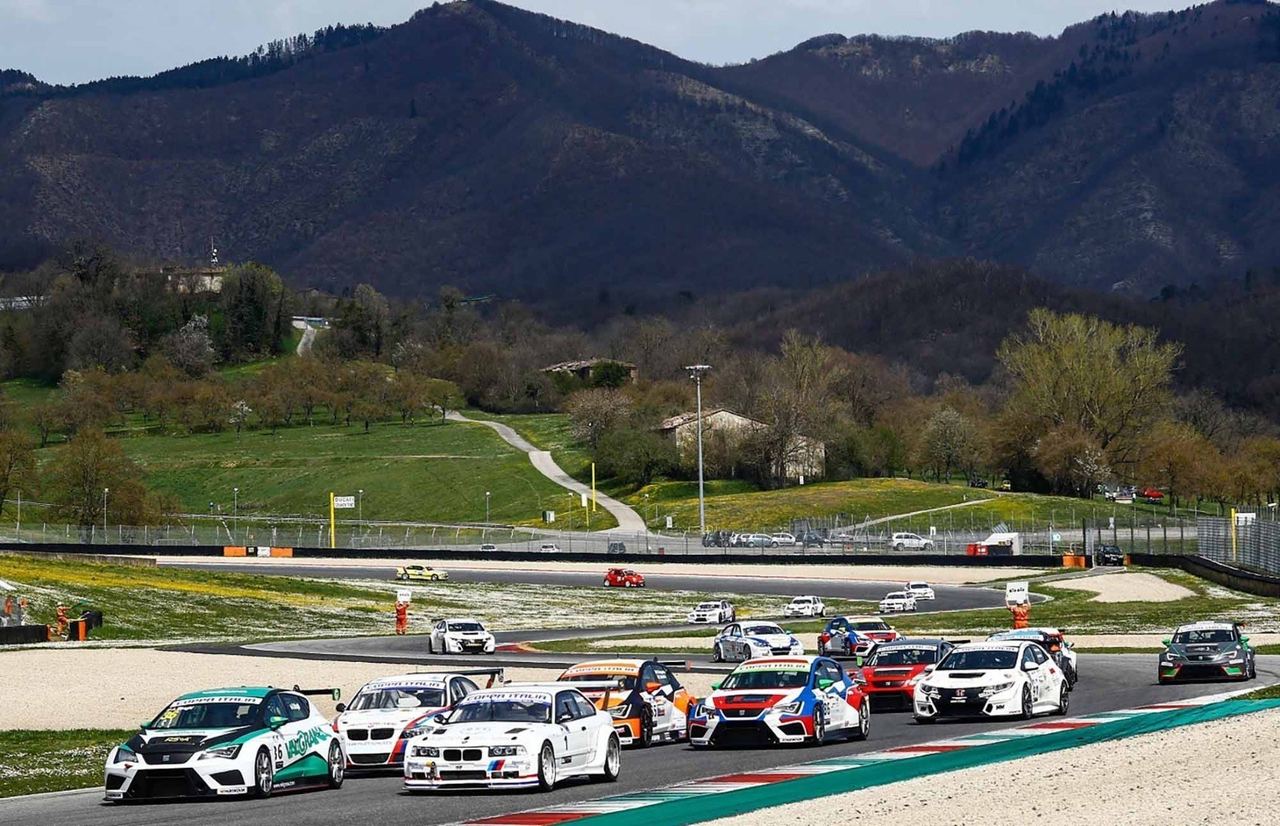
Photo Credit
Image courtesy of © Mugello CircuitThe bees of San Donato
The surprising fact is not the speed but the bees. For the 2024 Italian Grand Prix the circuit placed five hives and 120,000 pollinating bees inside the San Donato curve, the first MotoGP circuit to host hives, and for the occasion the kerbs at that corner were painted yellow and black. It is the only grandstand at the Mugello whose occupants never needed a ticket.
For one race weekend the kerbs at San Donato were painted yellow and black, in honour of the only residents who did not need a ticket.
It is part of a longer habit. The Mugello says it was the first circuit in the world to receive the FIA’s Achievement of Excellence, its highest level of environmental accreditation, and the first to obtain ISO 20121 for sustainable events, in 2020. In 2013 it devised a programme called KISS, Keep it Shiny and Sustainable, which Dorna later adopted as a model for other circuits. A shiny circuit, one suspects, is also a faster one.
Your turn
You do not need a works contract to drive it. The circuit runs track days for cars and motorcycles through the year, listed in the calendar on its website; the next car day falls on 21 and 22 November 2026. Rules, timings and prices are on the booking pages, and they change, so check them before you load the trailer.
Getting there is part of the pleasure. The circuit lies near Scarperia, north of Florence, and the old roads of the Mugello road race, run from 1914, still climb towards Firenzuola and the Futa pass. Coming back into the city, remember that Florence’s limited-traffic zone reads every number plate; park outside it, in one of the Firenze Parcheggi garages, and take the tram.
Our advice: come for a race weekend if you like a crowd, or a weekday track day if you prefer the hills to yourself, and take the Chiantigiana south afterwards for the slow lap of honour. The Mugello is a beautiful machine; Tuscany simply provides the bodywork.
Why it's on our list
- A track that never moved
- The bees of San Donato
- Your turn
Location
The map comes from Google Maps, which sets its own cookies once it loads.
More in depth
 Objects of DesirePear wood, copper chains and a composer’s cradle: the sound of TuscanyThe Teatro del Maggio’s pear-wood hall, Puccini’s birthplace in Lucca and the festival by his lake.
 Objects of DesireTwo telescopes and a finger: the gadgets that changed the skyGalileo’s two surviving telescopes, the lens that found Jupiter’s moons, and a famous finger.
 Objects of DesireA corridor over the river and a villa for princesses: Tuscany’s great housesThe reopened Vasari Corridor, Villa Reale di Marlia, Villa Bardini and a winery built into Chianti.