The back story
Ramparts, pilgrims and white roads: walking Tuscany, the back story
Lucca’s peaceful ramparts, Florence’s hill climbs, an archbishop’s pilgrim road and the Val d’Orcia.

Photo Credit
Image courtesy of © Fedispili · CC BY-SA 4.0 via Wikimedia CommonsTuscany walks well because its towns were built to be crossed on foot and its hills to be admired. Here is the back story of its great walks: Lucca’s ramparts that never fought, the climb to San Miniato’s “gate of heaven”, the Via Francigena drawn from an archbishop’s diary of 990, and the white roads of the Val d’Orcia, checked against official tourism and park pages in November 2026.
A wall that never fought
Lucca built a fortress it never needed. Work on the new ramparts was under way by 1544, with nearly 2,000 labourers on site each day; the result runs for 4.2 km, with 11 bastions and six gates. Tuscany’s favourite walk is, at heart, a very expensive piece of military architecture that changed its mind.
The walls fired in anger at nothing. Their one battle came in 1812, when the River Serchio flooded and the gates were closed and reinforced, saving the town. In the late 1800s the ramparts became a public park, and today the bastions hold benches, drinking fountains and children’s games under the trees. The only enemy they ever turned back was the river.
Up to the gate of heaven
Why does Tuscany walk so well? Because its towns were built to be crossed on foot and its hills to be looked at from. In Florence, start on the Ponte Vecchio, built in 1345 and the only bridge in the city left intact in August 1944, then climb past the Bardini Garden to the walls of the Forte Belvedere and along to Piazzale Michelangelo.
The last stretch is a flight of steps to San Miniato al Monte, the abbey that marked its millennium with a year of celebrations from April 2018. A marble scroll there tells the walker, in Latin, “this is the gate of heaven”. After the climb, most visitors are inclined to agree.
The other classic leaves the north of the city on Via Vecchia Fiesolana, which climbs steeply past villas and olive groves to Fiesole’s square and its Roman theatre. The road was not designed with modern calves in mind; the city’s number 7 bus brings you back down, which is the Florentine idea of a fair compromise.

Photo Credit
Image courtesy of © Petar Milošević · CC BY-SA 4.0 via Wikimedia CommonsThe archbishop’s diary
The longest walk in the region began as an expense report. In 990 Sigeric, Archbishop of Canterbury, travelled to Rome to receive the pallium and, on the way home, noted every stop in a diary. The Via Francigena of today is reconstructed from those notes, and its Tuscan stretch runs for some 380 km, from the Apennines above the Magra valley through Lucca, San Gimignano and Siena to Radicofani.
The only enemy Lucca’s walls ever turned back was the river.
The stage from San Gimignano to Monteriggioni is one of the finest: about 30 km and seven and a half hours on foot, past Romanesque churches and the abbey complex of Abbadia a Isola, which once rose like an island from a lake. At the end the towers of Monteriggioni appear above the woods, standing in the landscape like Dante’s giants. Water is found only in the towns, so carry plenty.
White roads and an island
South of Siena the Val d’Orcia has been on UNESCO’s World Heritage list as a cultural landscape since 2004, an outstanding example of a landscape redesigned before the Renaissance and celebrated by the painters of the Sienese School. It spans five comuni: Castiglione d’Orcia, Montalcino, Pienza, Radicofani and San Quirico d’Orcia. From the walk along Pienza’s southern walls, white roads lead down into the valley.
Offshore, the Tuscan Archipelago National Park looks after Elba’s network of trails, from the granite of Monte Capanne to the paths along the coast; the islands are also a UNESCO biosphere reserve. It is the only walk in Tuscany where the reward at the end may well be a swim.
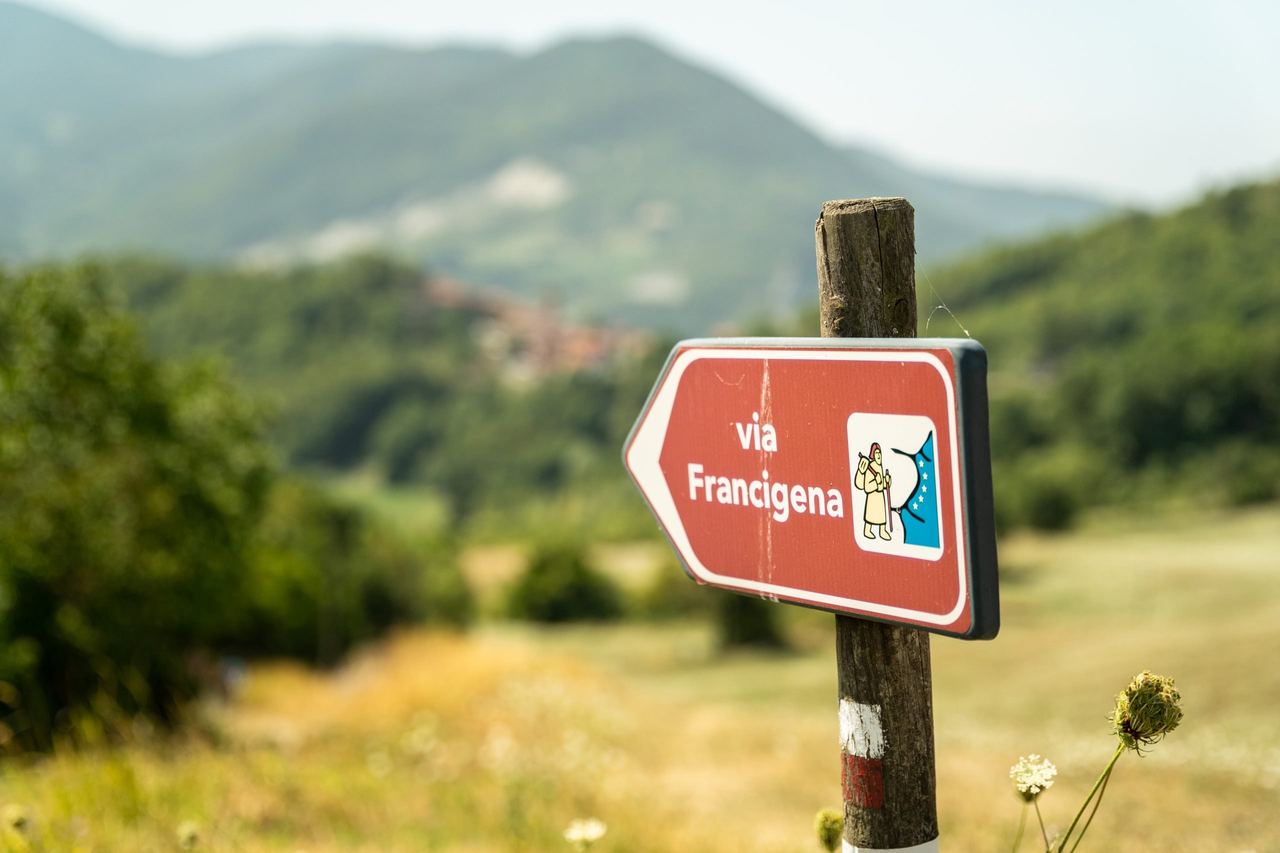
Photo Credit
Image courtesy of © The Via Francigena in TuscanyOur advice: walk Lucca’s walls at the end of the afternoon, Florence’s hills early in the morning before the coaches arrive, and the Francigena in spring or autumn, with stages booked ahead. Wear proper shoes on the white roads, which can be dusty in summer and muddy after rain, and leave the long Val d’Orcia walks for days when the sun is not the main event.
Why it's on our list
- A wall that never fought
- Up to the gate of heaven
- The archbishop’s diary
- White roads and an island
Location
The map comes from Google Maps, which sets its own cookies once it loads.
More in depth
 The back storyGold on the bridge, tripe in the market: shopping in Florence, the back storyWhy Florence shops like a guild town: the Ponte Vecchio’s goldsmiths, friars’ perfume, old markets.
 The back storyThe codice fiscale, the notary and the land registry: buying property in TuscanyHow buying works in Tuscany.
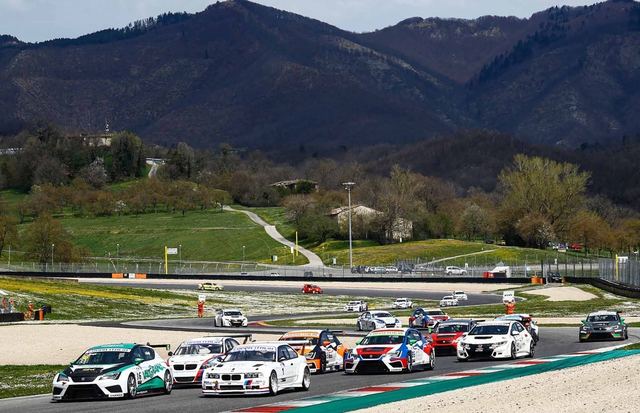 The back storyDust, Ferraris and a red light: Tuscany and the car, the back storyFrom the Mugello road race of 1914 to Ferrari’s circuit, the Chiantigiana and Florence’s ZTL.