The back story
Gold on the bridge, tripe in the market: shopping in Florence, the back story
Why Florence shops like a guild town: the Ponte Vecchio’s goldsmiths, friars’ perfume, old markets.

Photo Credit
Image courtesy of © Martin Falbisoner · CC BY-SA 3.0 via Wikimedia CommonsThe most famous shopping street in Florence is a bridge, and it smells a good deal better than it did before 1593. Here is the back story of how the city shops: goldsmiths on the Ponte Vecchio, perfume from the friars of Santa Maria Novella, leather from a post-war school behind Santa Croce, iron-and-glass markets and the fashion streets, checked against official pages in November 2026.
Butchers out, goldsmiths in
The most famous shopping street in Florence is a bridge. The Ponte Vecchio was built in 1345, after a flood in 1333 carried off its predecessor, with three arches and a row of masonry shops on each side. Until the 1590s those shops sold meat and fish, and the butchers were allowed to tip their waste straight into the Arno.
In 1593 the goldsmiths moved in, at the request of the Medici, whose private corridor now ran overhead and who had no wish to commute above a fish market. The jewellers have stayed ever since, under a bust of the goldsmith Benvenuto Cellini set up in 1900. Few cities have improved a high street simply by changing the smell.
Why does Florence still shop like a town of guilds and workshops, when every brand on earth is a click away? Because here the making and the selling never quite separated. The best of its shops are still places where something is made, mixed or stitched, often within sight of the counter.
Friars, perfume and leather
The Officina Profumo-Farmaceutica di Santa Maria Novella signs itself “Florence, since 1221”, and its frescoed sales room by the basilica feels like a chapel that took up perfumery. Soaps, scents and herbal waters are sold under painted vaults, and nobody seems to find this odd. Among the house icons is the Acqua della Regina, and its own history pages give a chapter to 4 November 1966, the day the Arno flooded the city.
Behind the Basilica of Santa Croce, the Scuola del Cuoio began in 1950, when Marcello Gori and his brother-in-law Silvano Casini agreed to teach leatherwork to war orphans in the friars’ old novitiate. The school still trains leatherworkers and sells their work; you enter from the garden around the apse, and a piece made to order can take some 150 days. Patience, here, is part of the price.
Iron, glass and tripe
The markets tell the same story in food. The covered market of San Lorenzo, in iron and glass, went up in 1874 to designs by Giuseppe Mengoni, who also built the market of Sant’Ambrogio and Milan’s Galleria Vittorio Emanuele. Today the Mercato Centrale keeps butchers, grocers and tripe sellers downstairs, while its upper floor, opened as a food hall in spring 2014, serves into the evening.
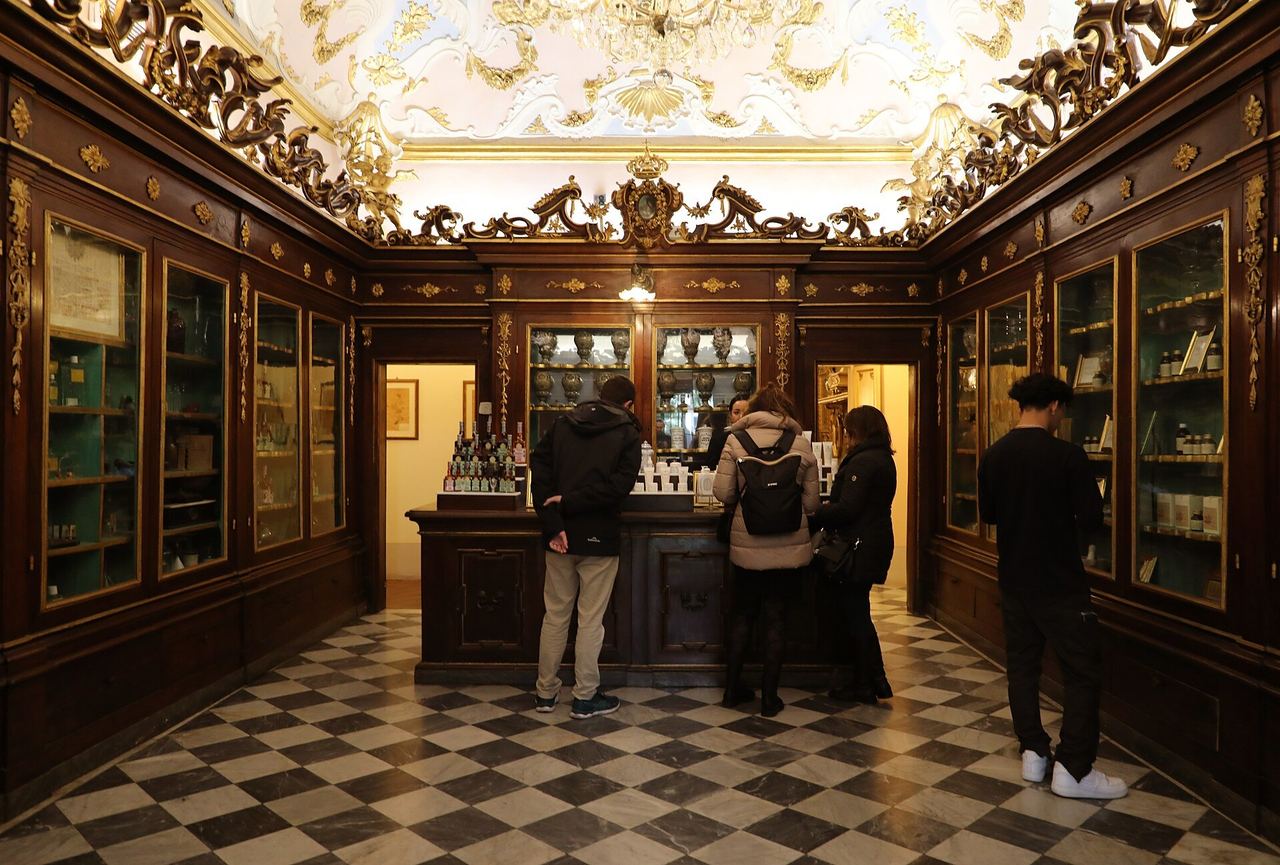
Photo Credit
Image courtesy of © Francesco Bini · CC BY-SA 4.0 via Wikimedia CommonsSant’Ambrogio, on Piazza Lorenzo Ghiberti, has traded since 1873 and calls itself the oldest market in Florence. It is where Florentines do their shopping: local produce outside, short supply chains inside, and a stallholder’s “buongiorno” that is best returned. Bring a bag of your own and a little patience at the busiest stalls.
Few cities have improved a high street simply by changing the smell.
From Tornabuoni to the outlet
For fashion, Via de’ Tornabuoni and its neighbours, Via della Vigna Nuova and Via Strozzi, hold the flagships of the great Italian houses. Window-shopping here is a contact sport only in the sense that the doormen are very well dressed.
Twice a year the trade comes to town. Pitti Uomo fills the Fortezza da Basso each January and June; the June 2026 edition counted 740 exhibitors and 14,500 visitors, and Pitti Uomo 111 runs from 12 to 15 January 2027. Out of town, The Mall Firenze near Leccio opened in 2001 as, in its own words, the first destination to gather the great international luxury brands in one place; shuttle buses run from Florence.
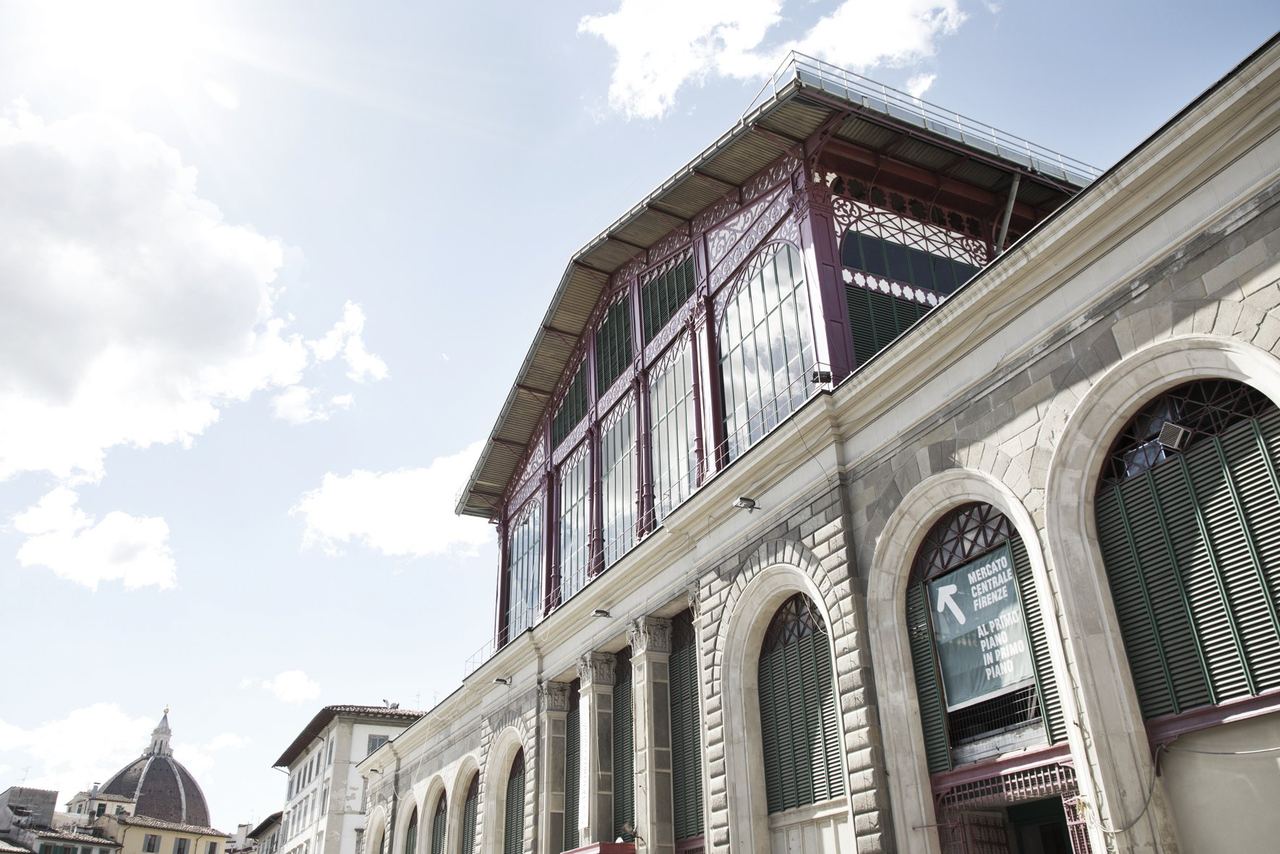
Photo Credit
Image courtesy of © Mercato CentraleOur advice: shop the bridge early or late, when you can see the windows rather than the crowd; book a visit to the Scuola del Cuoio to watch the artisans at work on weekdays; go to Sant’Ambrogio in the morning, when the stalls are full; and save the outlet for a weekday, since the coaches have the same idea at weekends.
Why it's on our list
- Butchers out, goldsmiths in
- Friars, perfume and leather
- Iron, glass and tripe
- From Tornabuoni to the outlet
Location
The map comes from Google Maps, which sets its own cookies once it loads.
More in depth
 The back storyThe codice fiscale, the notary and the land registry: buying property in TuscanyHow buying works in Tuscany.
 The back storyDust, Ferraris and a red light: Tuscany and the car, the back storyFrom the Mugello road race of 1914 to Ferrari’s circuit, the Chiantigiana and Florence’s ZTL.
 Coming soonComing soon: the tech the makers have promisedOfficially announced tech, from Gemini glasses to Meta's VR specs, plus the newest arrivals.