The Fitting Room
Made within sight of the counter: Florence’s leather, scent and gold
The Scuola del Cuoio’s post-war workshop, the friars’ Officina, the goldsmiths’ bridge, Pitti Uomo.
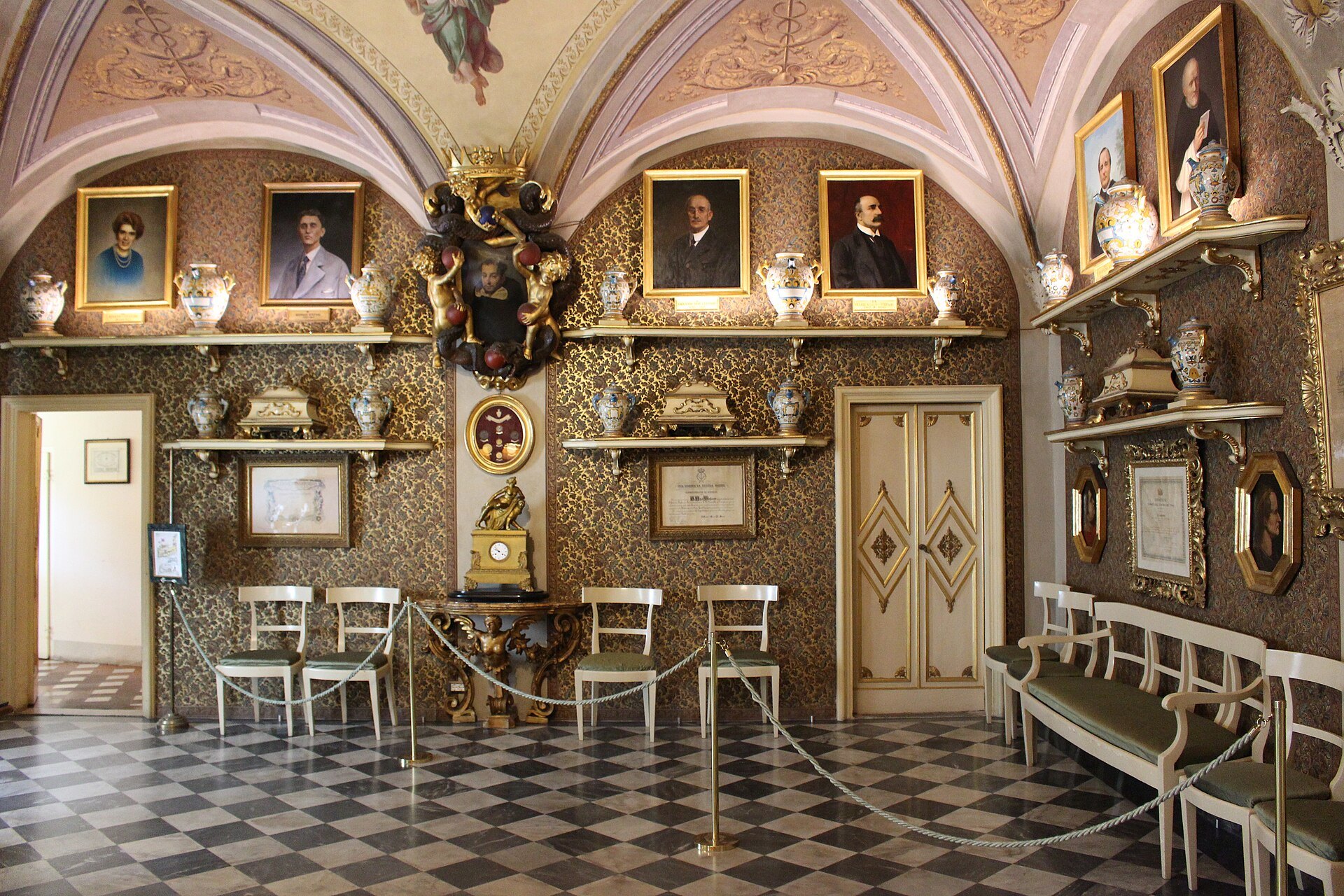
Photo Credit
Image courtesy of © Moon rabbit 365 · CC BY-SA 4.0 via Wikimedia CommonsWhy does a city with every luxury flagship still prize the thing made in the back room? Because Florence never quite separated the making from the selling. From a leather school founded for war orphans to an Officina that signs itself “since 1221”, the goldsmiths of the Ponte Vecchio and the menswear fair that fills the Fortezza da Basso, here is how the city dresses, checked in November 2026.
A school behind Santa Croce
In 1950 Marcello Gori and his brother-in-law Silvano Casini agreed to teach the craft of leather to war orphans, in what had been the novitiate of the Franciscan friars inside the convent of Santa Croce. The Scuola del Cuoio was born of that arrangement, and it still works behind the basilica: you enter from the garden that wraps around the apse, on Via San Giuseppe.
It remains a school as well as a shop, with professional courses and shorter workshops, and its artisans work at their benches from Monday to Friday. Bags, belts, jackets and boxes are cut and stitched on site; when a piece is out of stock the school will make it for you, and warns that this takes about 150 days. In Florence, that counts as prompt.
From November to March the shop opens Monday to Saturday from 10am to 6.30pm, and every day from April to October. Go on a weekday if you want to see the work rather than only the result: watching an artisan cut a hide is the best sales pitch the school has, and it never raises its voice.
Scent from the friars
Across the city, the Officina Profumo-Farmaceutica di Santa Maria Novella signs itself “Florence, since 1221”. Its frescoed sales room by the basilica, and a panelled room hung with portraits, are as much a part of the purchase as the bottle. The house still sells its own shaving line, rose water and colognes, which makes it the oldest grooming counter most visitors will ever stand at.
Among its icons is the Acqua della Regina, and its history pages give a chapter of their own to 4 November 1966, the day the Arno flooded Florence. A shop that has outlived a flood tends to take a long view of fashion; the frescoes, it is fair to say, were never seasonal.
A piece made to order can take some 150 days, which in Florence counts as prompt.
Gold on the bridge, trade at the Fortezza
The Ponte Vecchio has belonged to the goldsmiths since 1593, when they replaced the butchers and fishmongers, and a bust of Benvenuto Cellini, set up in 1900, presides over the trade from the middle of the bridge. For clothes, the great Italian houses keep their flagships on Via de’ Tornabuoni and its neighbours, Via della Vigna Nuova and Via Strozzi.
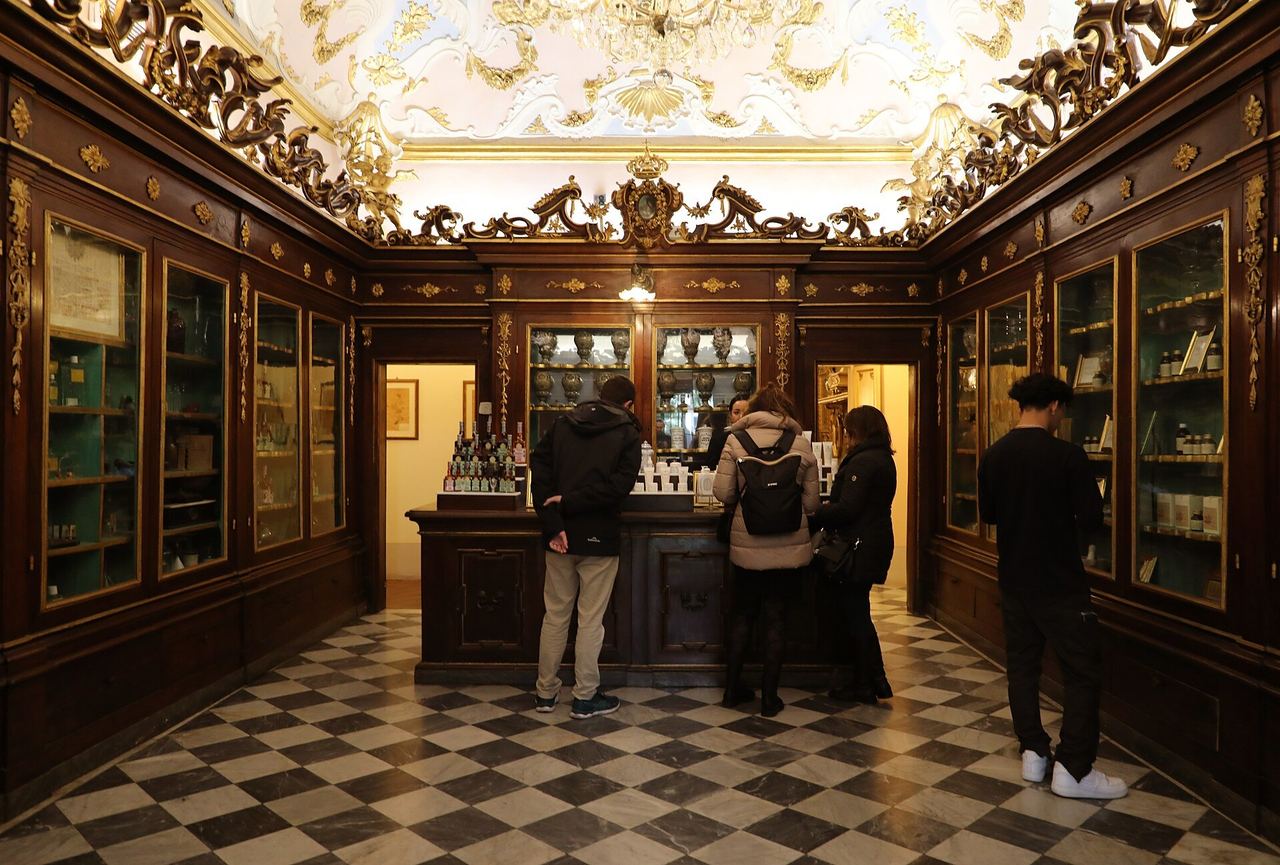
Photo Credit
Image courtesy of © Francesco Bini · CC BY-SA 4.0 via Wikimedia CommonsTwice a year Florence becomes the capital of menswear. Pitti Uomo fills the Fortezza da Basso each January and June; the June 2026 edition counted 740 exhibitors and 11,030 buyers, and Pitti Uomo 111 runs from 12 to 15 January 2027. The fair is for the trade, but the city it brings is not: for four days, the best-dressed men in Europe queue for the same espresso as you.
What is Florentine tailoring, then? Less a cut than a habit: buying things from the people who made them, and expecting to wait. The flagships sell the label; the workshops sell the time.
Our advice: visit the Scuola del Cuoio on a weekday, the Officina in the morning before the tour groups, and the Ponte Vecchio at opening or closing. If you are in Florence in mid-January, book your hotel early: the fair fills the city.

Photo Credit
Image courtesy of © Martin Falbisoner · CC BY-SA 3.0 via Wikimedia CommonsWhy it's on our list
- A school behind Santa Croce
- Scent from the friars
- Gold on the bridge, trade at the Fortezza
Location
The map comes from Google Maps, which sets its own cookies once it loads.
More in depth
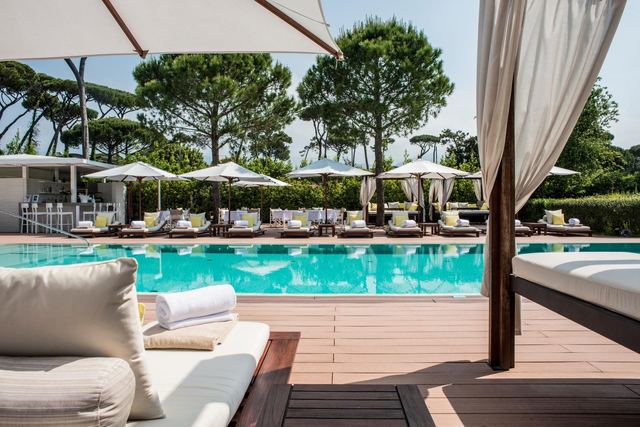 The Fitting RoomLinen, pines and a pelican: what the Tuscan coast asks you to wearForte dei Marmi’s beach clubs, a Liberty villa by the sea, Il Pellicano’s jetty and its ISSIMO shop.
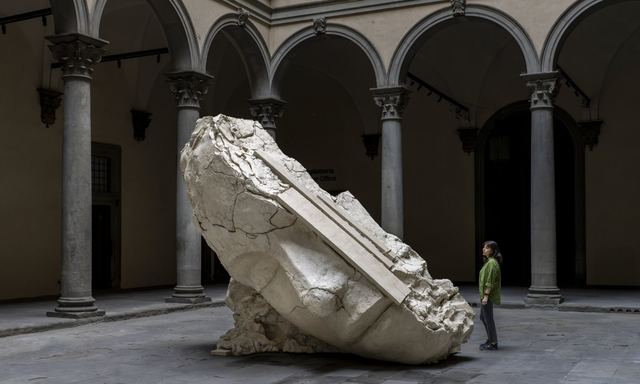 The Fitting RoomA hundred editions of yarn: Florence’s fashion season, January 2027Pitti Uomo 111, Pitti Filati’s 100th edition, Pitti Bimbo, The Mall Firenze and Palazzo Strozzi.The back storyPalaces on the Arno and castles in the Chianti: where to stay in TuscanyPalaces, castles, spa resorts and seaside hotels.