The back story
Coffee in Tuscany: espresso at the bar, cappuccino at breakfast and Livorno’s ponce
How Tuscany drinks its coffee: what to order and when, standing at the bar, summer shakerato, Livorno’s ponce and Florence’s historic cafés.
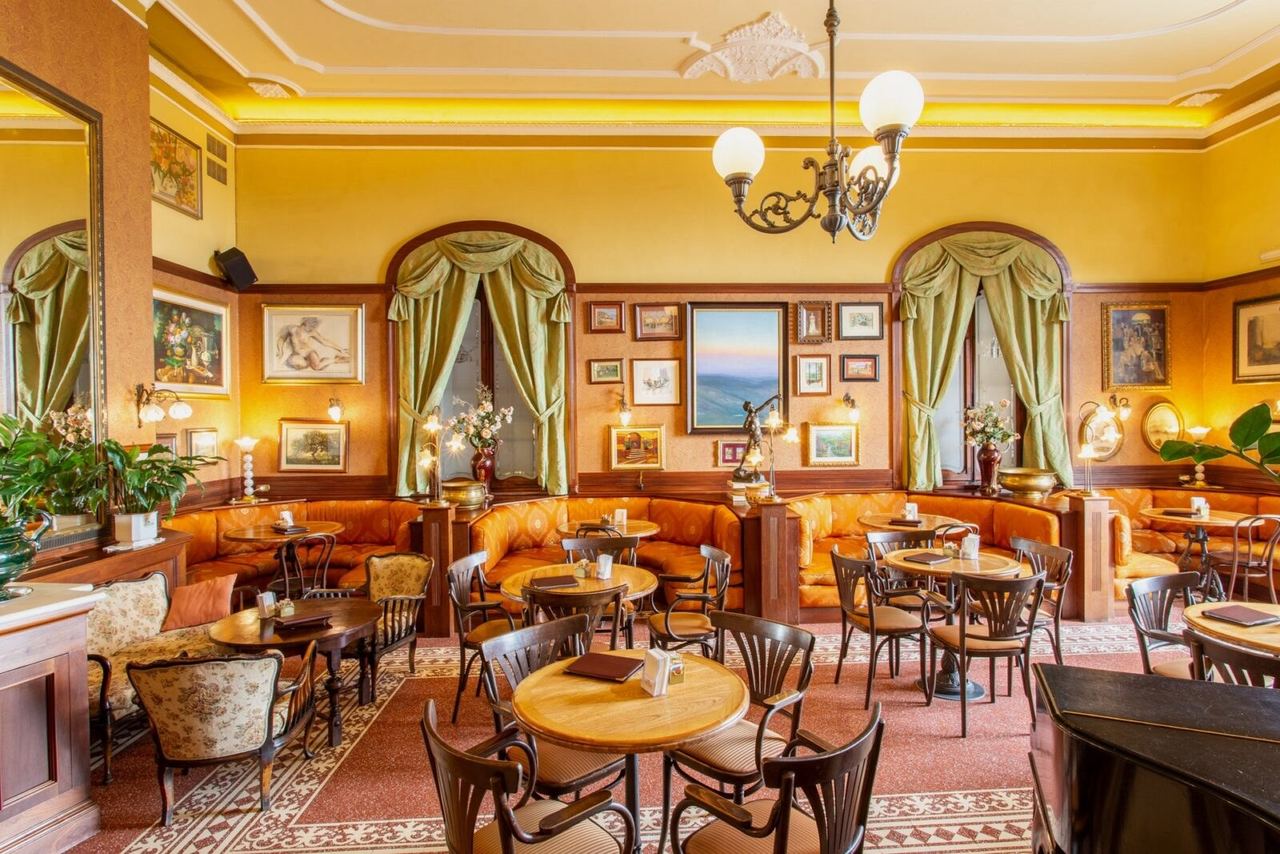
Photo Credit
Image courtesy of © Caffè PolizianoIn Tuscany, as across Italy, coffee is a short pause taken standing at a counter, not a long sit with a laptop. Learn a handful of words, know which drinks belong to which hour, and the bars of Florence, Siena and Livorno open up to you.
At the bar
Ask for “un caffè” and you get an espresso: in Italy nobody calls it anything else. Most people drink it standing at the counter, in a couple of minutes, and go on their way. In busier bars you pay at the till first and hand your receipt to the barista; in quieter ones you order, drink and pay on the way out.
Sit down at a table and you are paying for the table and the service too. In the grand cafés on Florence’s Piazza della Repubblica and Piazza della Signoria the difference can be considerable, so look at the price list by the till before you settle in. Take a coffee from the counter to a table and you will be asked for the table price.
Ask for “un caffè” and you get an espresso: in Italy nobody calls it anything else.
What to order
Caffè is a single espresso; a doppio is a double; ristretto is shorter and stronger, lungo longer and milder. A caffè macchiato is an espresso “stained” with a spoonful of foamed milk, and a caffè corretto is “corrected” with a splash of grappa or another spirit. Ask for a “latte” on its own and you will get a glass of milk: the milky coffee is a caffè latte.
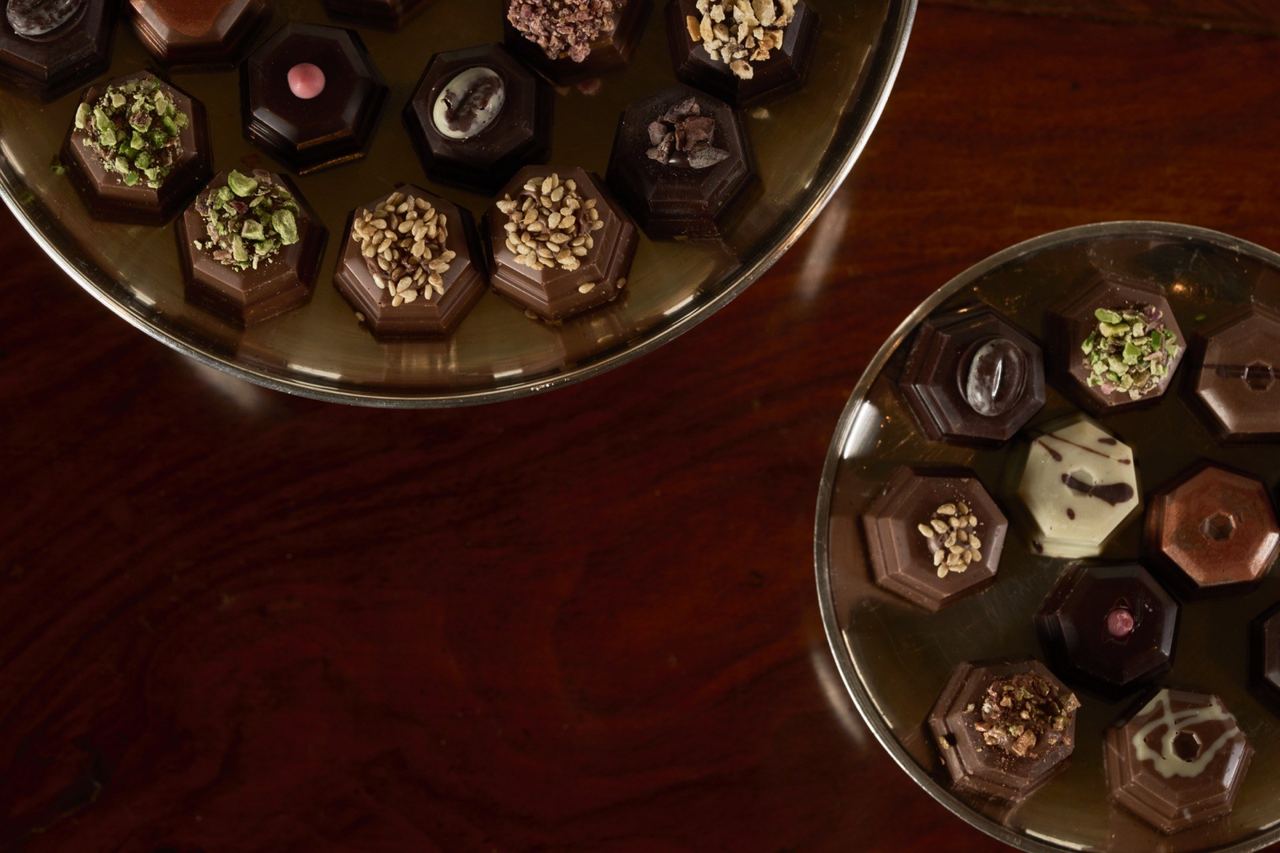
Photo Credit
Image courtesy of © RivoireCappuccino, espresso under steamed milk and foam, is a breakfast drink, taken with a pastry at the counter. Italians rarely drink milky coffee after a meal; you can order one at any hour, but after lunch or dinner a caffè is what everyone around you will be drinking.
Summer: shakerato and granita
When the heat comes, bars shake espresso hard with ice and a little sugar until it foams, and pour it into a stemmed glass: caffè shakerato. Granita di caffè, sweet frozen coffee crystals often topped with whipped cream, came north from Sicily. If you ask for a frappè in Italy, expect a milkshake rather than iced coffee; the shakerato is the drink you are looking for.
Livorno’s ponce
Tuscany’s own coffee drink comes from the port of Livorno. Ponce was created there between the 17th and 18th centuries, when the Livornesi took English punch and made it with coffee instead of tea and rum instead of aquavit. The traditional version is coffee, rum and Sassolino, an anise liqueur; most bars heat sugar and rum with the steam wand of the espresso machine and top it with a short ristretto. It comes in a thick-bottomed glass, the gottino, so you do not burn your fingers, and it is at its best after dinner on a cold evening in the Venezia quarter (visittuscany.com).
Florence’s historic cafés
Florence’s café history is written around its squares. Gilli began in 1733 as a sweet bakery on Via dei Calzaiuoli, run by the Swiss Gilli family, and moved to the Piazza della Repubblica in the 1920s; it is the city’s only surviving Belle Époque café. Across the square, Paszkowski opened in 1846 as the Caffè Centrale, passed to a Polish family in 1904, and was declared a national monument in 1991. Le Giubbe Rosse, opened as a beer hall in 1897, became the home of Florence’s Futurists.
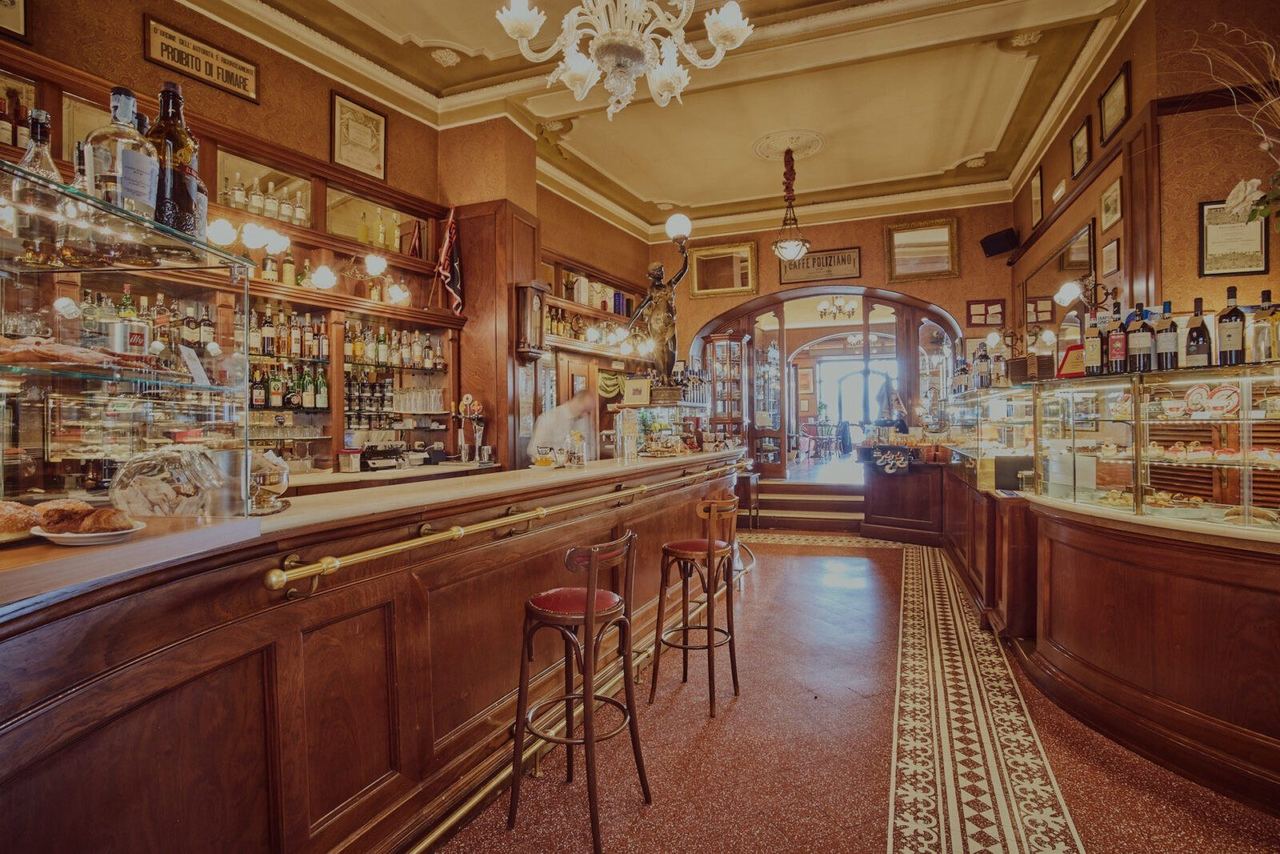
Photo Credit
Image courtesy of © Caffè PolizianoOn the Piazza della Signoria, Rivoire was founded in 1872 as a chocolate maker, and its thick hot chocolate is still the reason to sit facing the Palazzo Vecchio. Procacci has served truffle sandwiches on Via de’ Tornabuoni since 1885, and Vivoli, near Santa Croce, began as a dairy in 1929 before it turned to gelato (visittuscany.com).
Beyond Florence
In Siena, the Nannini family’s bar on Via Banchi di Sopra, a few steps from the Campo, is the place to try panforte and ricciarelli with your coffee. In Montepulciano, the Caffè Poliziano has a balcony over the Valdichiana.
Our advice: have your first coffee of the day standing at the counter of a neighbourhood bar, keep the grand cafés for one long sit-down with a view, order cappuccino at breakfast and a caffè after lunch, and on a cold night in Livorno ask for a ponce.
Why it's on our list
- How to order at the bar
- Cappuccino at breakfast
- Summer shakerato
- Livorno’s ponce
- Florence’s historic cafés
Location
The map comes from Google Maps, which sets its own cookies once it loads.
More in depth
 The back storyThe Treno Natura and Florence’s railway age: Tuscany by trainOn chosen days a steam train leaves Siena on a branch line through the Crete Senesi, and in Florence one of the great modernist stations of Europe stands at the head of Italy’s first high-speed line.
 History & heritageEtruscans, the Medici and the birth of Italian: Tuscany’s heritageEtruscans, Romans, the rival city-states, the Medici, Brunelleschi and Michelangelo, and the birth of the Italian language: Tuscany’s heritage.
 The back storyFrom the Uffizi to a winery in a Chianti hillside: Tuscany’s art and architectureFrom the Renaissance halls of the Uffizi to a winery hidden in a Chianti hillside and a 1930s tobacco factory reborn: the story of Tuscany's art and architecture, and where to see it now.